The essentials before you come
- The nave is free, the necropolis is not. Two regimes in a single building: an active cathedral and a state monument. What each section offers is detailed on the ticket page.
- Over 70 recumbent figures and tombs, the largest collection of funerary sculpture from the 12th to the 16th century in the world. Each is described individually on the recumbent figures page.
- A guided tour in French is included with the ticket, from Monday to Saturday at 11:00 AM and 3:00 PM, and on Sunday at 12:30 PM and 3:00 PM, lasting about 1 hour 30 minutes. Hardly anyone knows this: see the guided tours page.
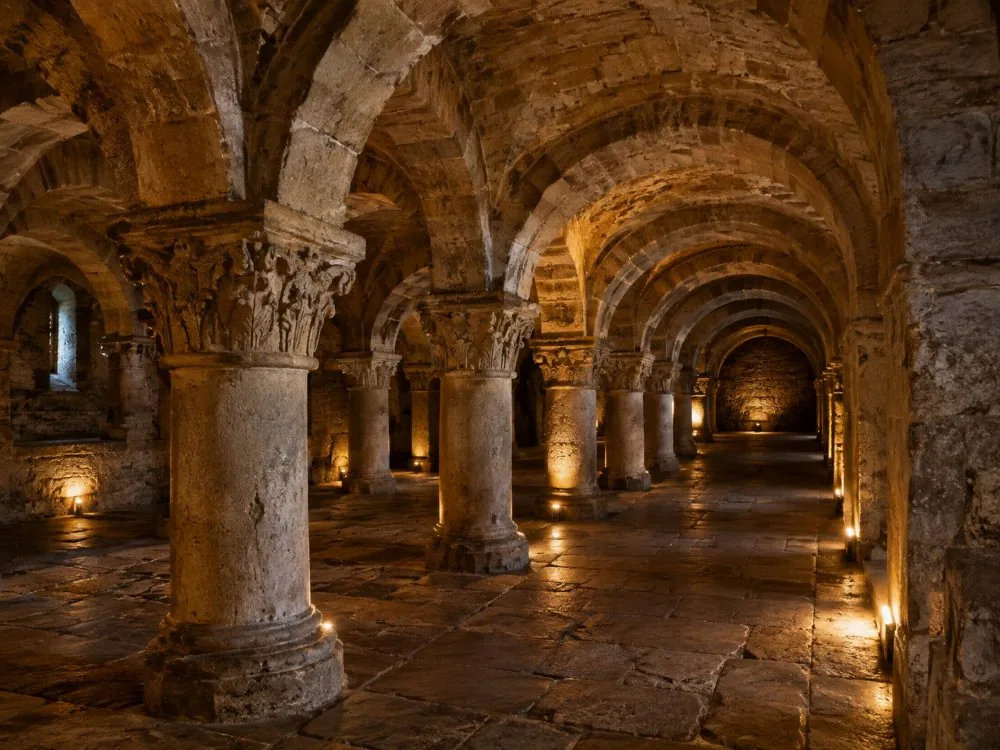
- In 1793, the tombs were emptied. The remains were recovered in 1817 and placed mixed together in an ossuary in the crypt: what you see are monuments, not actual graves. The full story is on the 1793 page.
- The monument closes during religious services. This is the main reason for missed visits on Sunday mornings. The seasonal schedules are on the opening hours page.
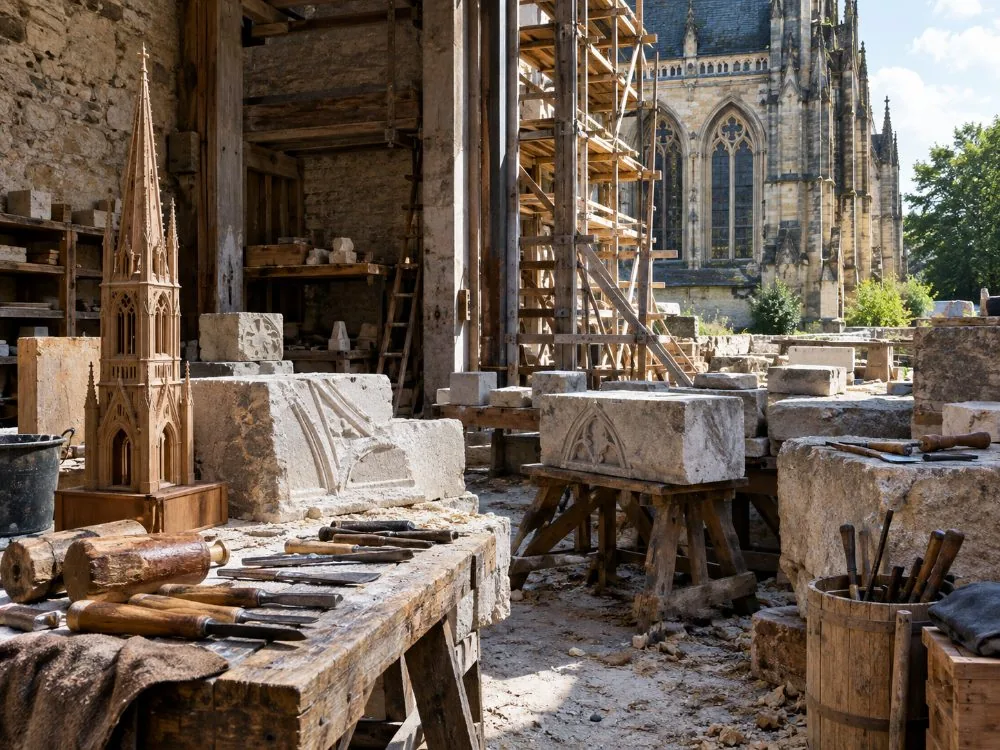
- La Fabrique de la Flèche is closed on Mondays, whereas the necropolis remains open that day. The restoration project is explained on the spire page.
What the royal necropolis ticket includes
The highlight of this page: the admission ticket for the royal necropolis, the one nine out of ten visitors need, valid for the whole day.
What you will see
- The choir of Suger and its ambulatory with radiating chapels, consecrated on 11 June 1144
- The transept and its recumbent figures : Dagobert, Clovis, Childebert, Charles V, Bertrand du Guesclin
- The Renaissance tombs of Louis XII and Anne of Brittany, of Francis I and Claude of France, of Henry II and Catherine de Medici
- The crypt, the ossuary and its plaque, and the praying statues of Louis XVI and Marie-Antoinette
What is included
- The guided tour in French, from Monday to Saturday at 11 am and 3 pm, on Sunday at 12 :30 pm and 3 pm, approximately 1 hour 30 minutes
- Access to La Fabrique de la Flèche from Tuesday to Sunday ; an audio guide in English is available on site
- Photography without flash, permitted throughout the tour
- Please note : there is no cloakroom, large bags are problematic, and the monument closes during services
The tour, in the actual order
What you go through upon entering, step by step, with what each part offers — and why skipping the first means missing everything else.
You enter through the west façade, cross the nave without a ticket, then present your ticket at the back : the necropolis begins there, at the level of the choir. The route is signposted and ends with the crypt, beneath the choir.
- The nave, free and without a ticket — Three aisles rebuilt from 1231 under Louis IX by Pierre de Montreuil. Why it matters : this is where visitors stop who leave believing they have seen the necropolis. There is not a single recumbent figure in this part.
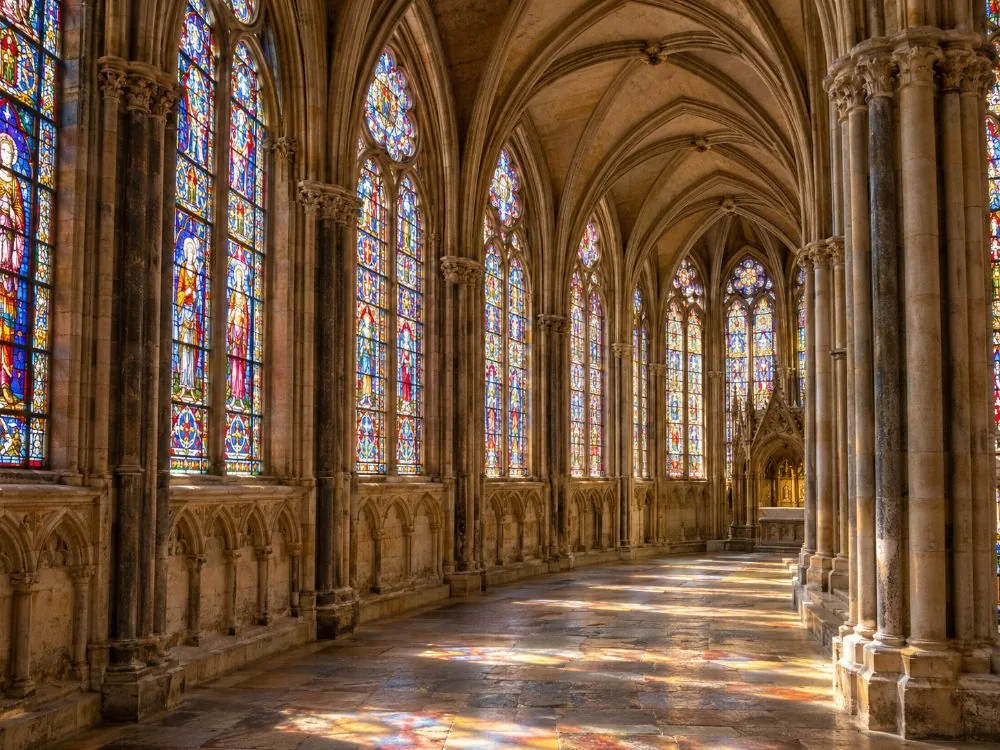
- Suger’s choir — Consecrated on 11 June 1144, with its pointed arches, ribbed vaults and radiating chapels opening onto one another. Why it matters : this is the birth of Gothic architecture, the wall replaced by glass.
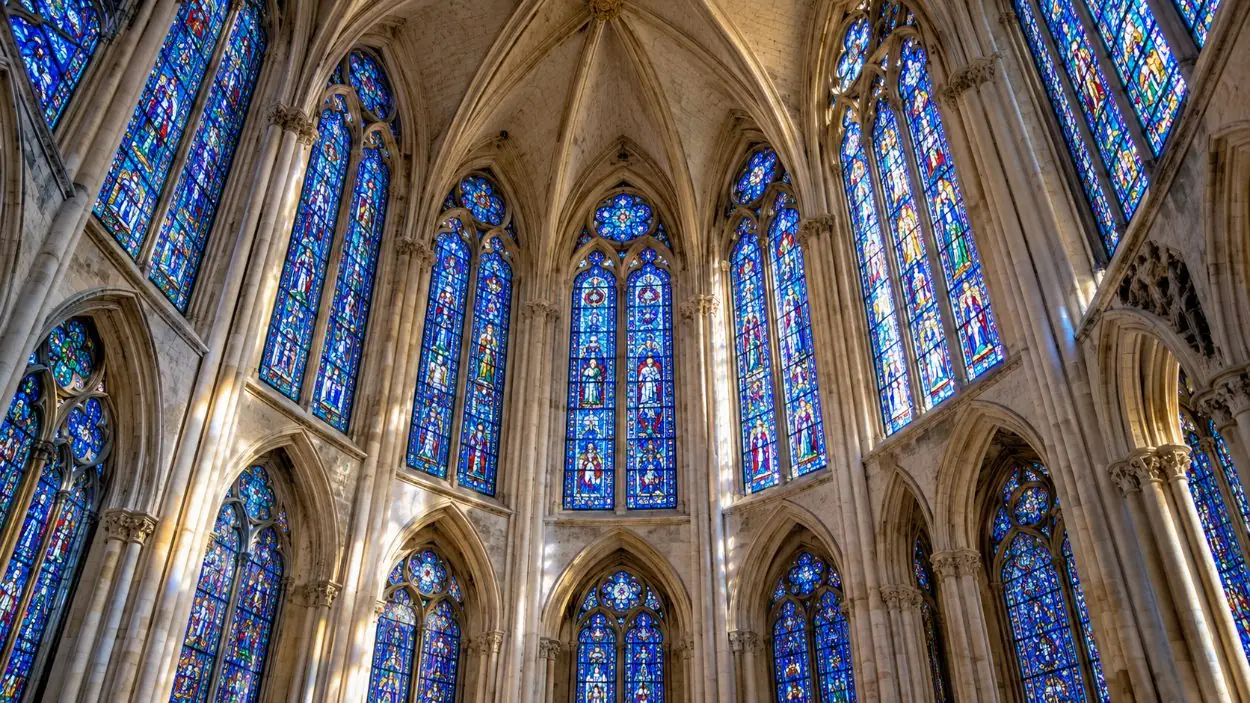
- The ambulatory and the stained glass — Walk around the choir from the rear, chapel after chapel. Why it matters : Suger’s doctrine, the « lux nova », is seen here and nowhere better. In January, bring a coat—it’s constantly drafty.
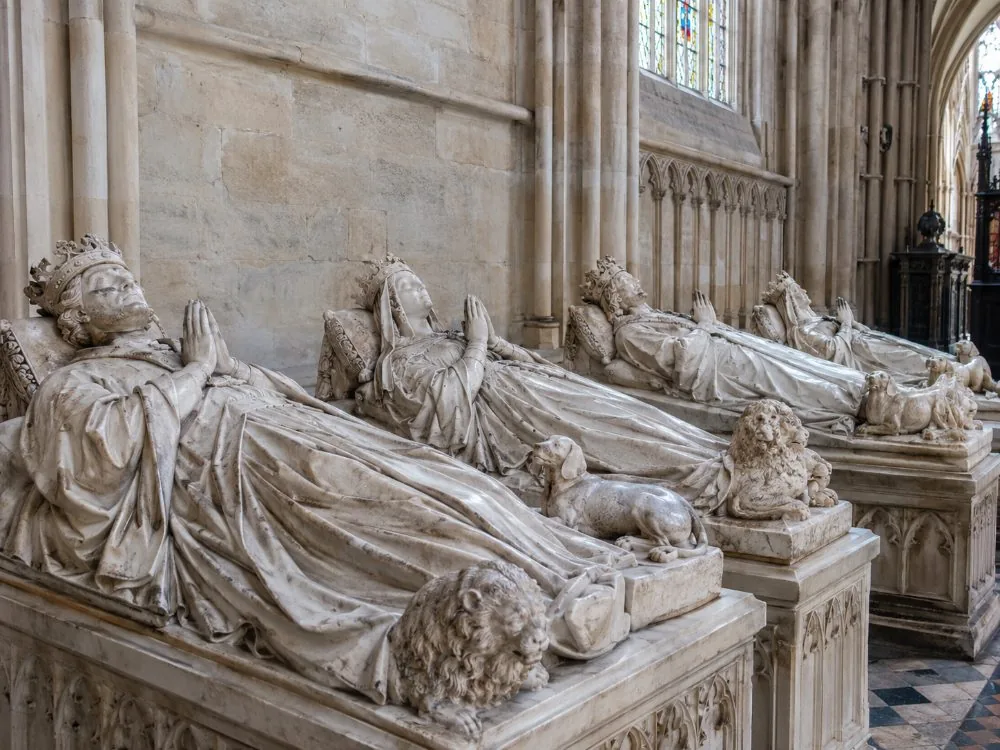
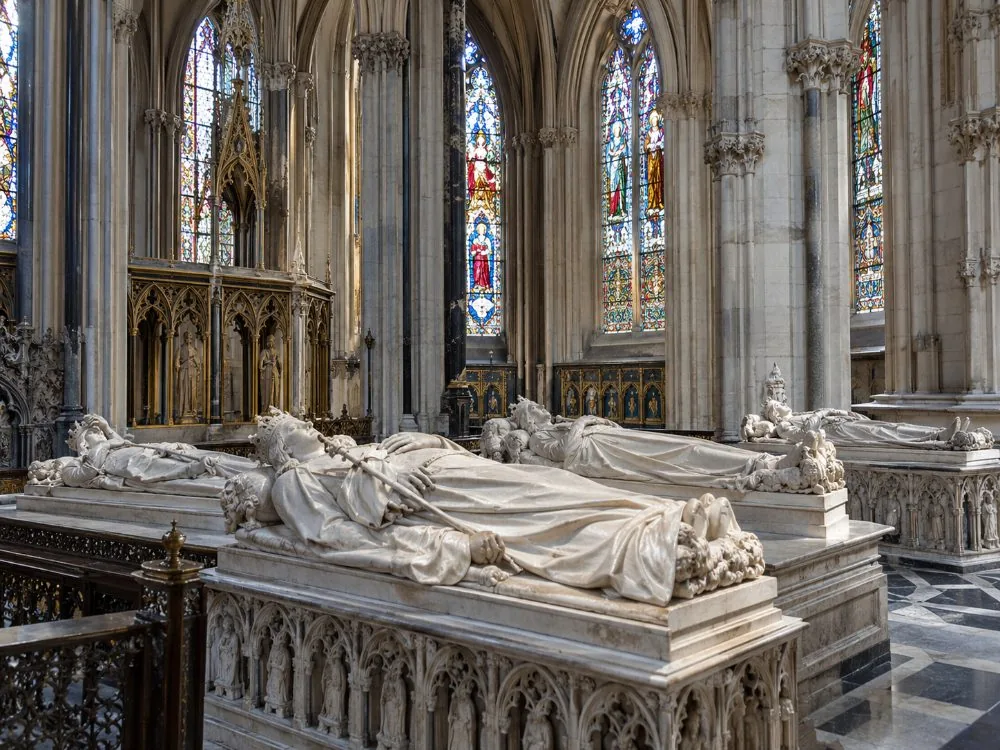
- The transept recumbent figures — Dagobert depicted in 13th-century sculpted comic-strip style, Clovis, Childebert, Charles V the Wise, and Bertrand du Guesclin, constable and non-king, lying at the king’s feet. Why it matters : this is the world’s largest collection of funerary sculpture from the 12th to the 16th century.
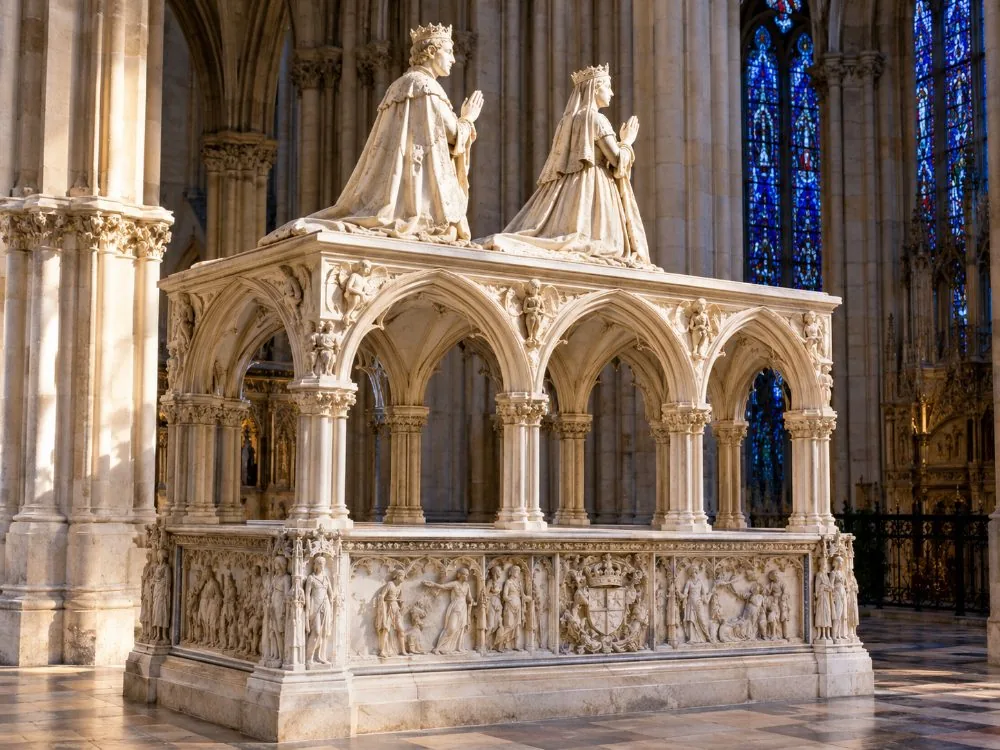
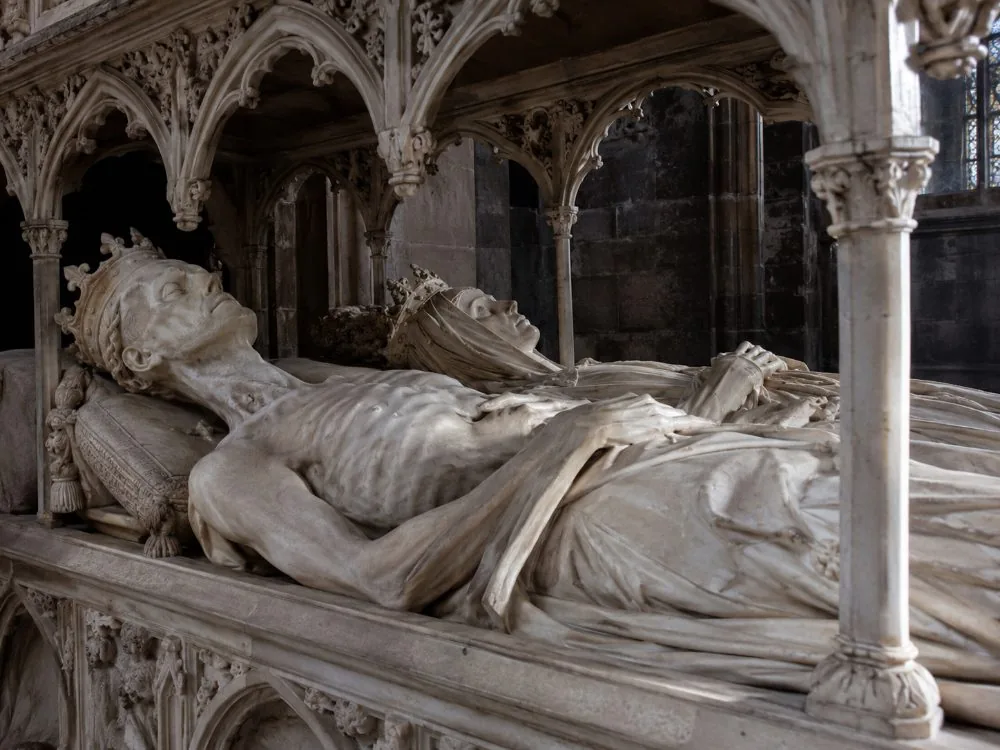
- Louis XII and Anne of Brittany — Renaissance double tomb: the couple dressed and crowned above, the « transi », the two naked, emaciated bodies, below. Why it matters : this is what children don’t forget and what adults talk about when they get home.
- Francis I and Claude of France — A sculpted triumphal arch, immense, on the scale of a Roman monument, next to the tomb of Henry II and Catherine de’ Medici. Why it matters : you see at a glance what the Renaissance changed in the way a king was buried.
- The crypt and the ossuary — Beneath the choir: the crypt, the plaque listing the sovereigns, and behind it the bones recovered from the graves in 1817, impossible to reassign. Why it matters : this is the answer to « where are the bodies », and it’s not the one you expect.
- La Fabrique de la Flèche — The reassembly site of the spire dismantled in 1846-1847, open for visits on the parvis and inside the building, closed on Mondays. Why it matters : you see stone being carved for a tower that hasn’t existed for one hundred and eighty years.
Allow 1 hour for a self-guided visit, 1 hour 30 minutes with the included guided tour, 2 hours if you add La Fabrique de la Flèche. The timing is detailed on the page dedicated to duration, and the full order of works on the « what to see » page.
Book in four steps
Choose your option
The ticket for the royal necropolis alone, the ticket with the audio guide on smartphone, or the Paris Museum Pass if you’re visiting several monuments. The three are compared below and on the booking page.
Check the day and time
The monument is closed during services and La Fabrique de la Flèche is closed on Mondays. Opening hours change from April to September and from October to March: see the opening hours page.
Book the date
The date is booked via GetYourGuide; the necropolis ticket is valid for the whole day. What requires booking and what does not is explained on the booking page.
Arrive and aim for 11 am
Metro line 13, Basilique de Saint-Denis station, 100 metres away. Arrive before 11 am to catch the included guided tour: times to be confirmed on-site on the day itself.
The royal necropolis, date by date
Live availability for the royal necropolis entry ticket, the one that opens the choir, the recumbent figures and the crypt. The nave, however, never requires a ticket.
Ticket only, ticket with audio guide, or Museum Pass?
Three ways to enter the royal necropolis. The ticket alone is sufficient for most people, especially if you aim for the included guided tour. The audio guide is useful for those who cannot wait until 11 am. The pass only makes sense if you are visiting several Parisian monuments.
| Our choiceAdmission ticket to the royal necropolis of Saint-Denis | Basilica ticket with audio tour on smartphone | Paris Museum Pass, 2, 4 or 6 consecutive days | |
|---|---|---|---|
| What it unlocks | Royal necropolis and La Fabrique de la Flèche | Royal necropolis, with audio commentary | Saint-Denis and numerous Parisian monuments |
| Duration | Ticket valid for the day | 1 h 30, at your own pace | 2, 4 or 6 consecutive days |
| Commentary | Guided tour in French included, 11 am and 3 pm ; audio guide in English available on site | Download the app beforehand, headphones not provided | None : the pass only grants entry |
| Collection | Valid on phone or printed | Voucher and app, to prepare before leaving | Physical collection near the Louvre, 9 am-4 pm |
| The trap | The monument closes during services | Without headphones, the audio is inaudible in the ambulatory | The activation day counts as day 1 |
| Cancellation | See conditions on the selected date | Free up to 24 hours before | See conditions on the selected date |
| Rating | 4.6 ★ (442 reviews) | 5.0 ★ (1 review, recent offer) | 4.1 ★ (4,575 reviews) |
| Book → | View → | View → |
Photo gallery
The Basilique in pictures
The chevet, the gisants, the Renaissance tombs, the crypt and the spire construction site, as seen along the route.
Six bookings compared
The royal necropolis ticket, two ways to accompany it, and three visits that extend the same story: the other royal Gothic on the Île de la Cité, the Stade de France one tram stop away, and the hill where Saint Denis was beheaded. Our detailed reviews are on the reviews page.
 Most booked
Admission ticket for the royal necropolis of Saint-Denis
 Ticket + audio
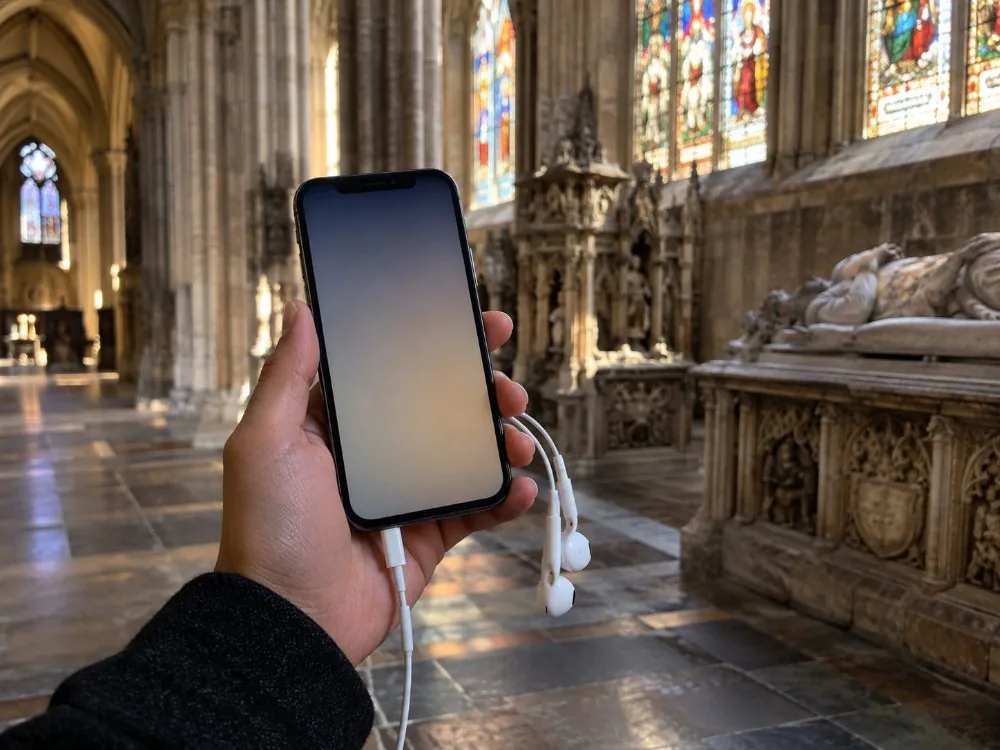
Basilica ticket and audio tour on smartphone
 Saint-Denis included
Paris Museum Pass, 2, 4 or 6 consecutive days
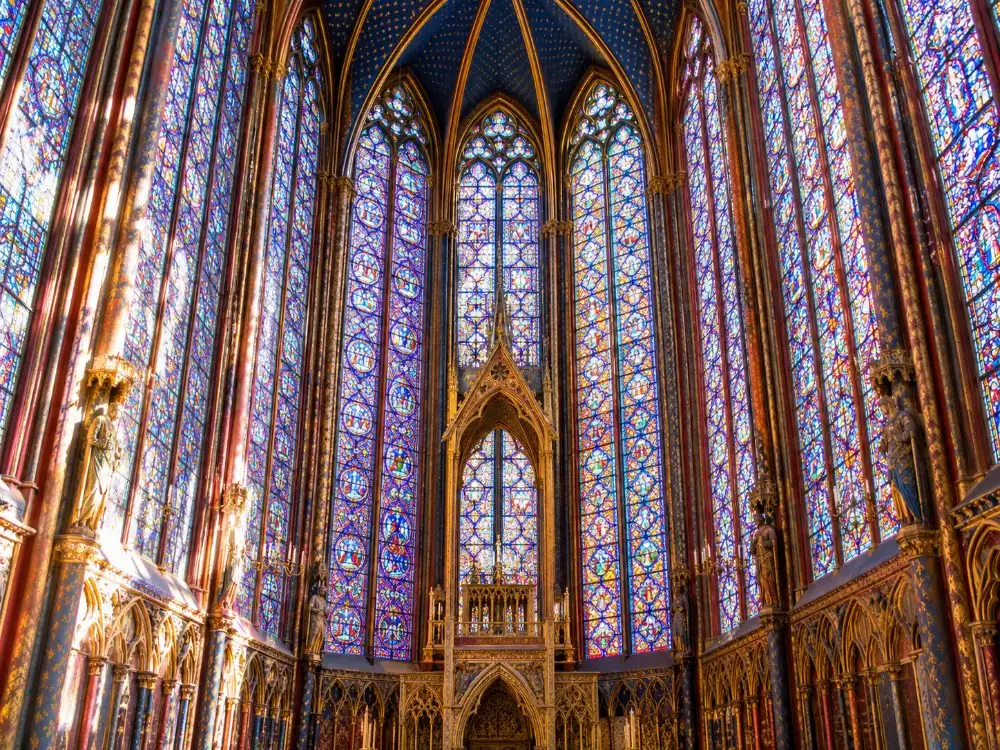 The other royal Gothic
Sainte-Chapelle and Conciergerie, combined ticket
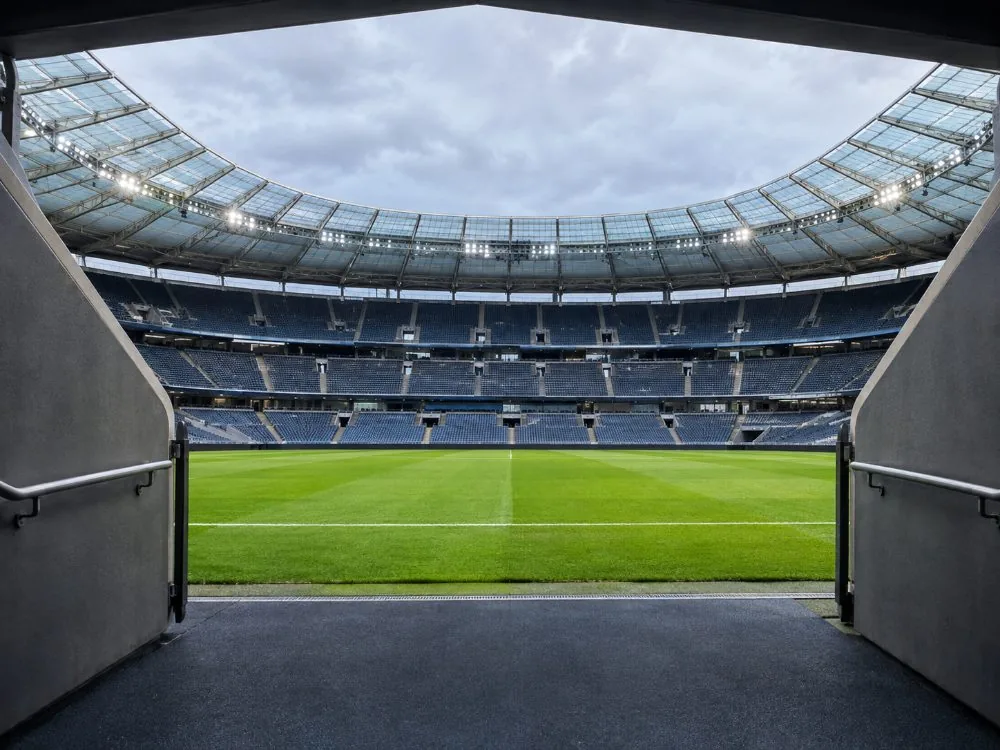 One tram stop away
Behind the scenes at the Stade de France, guided tour
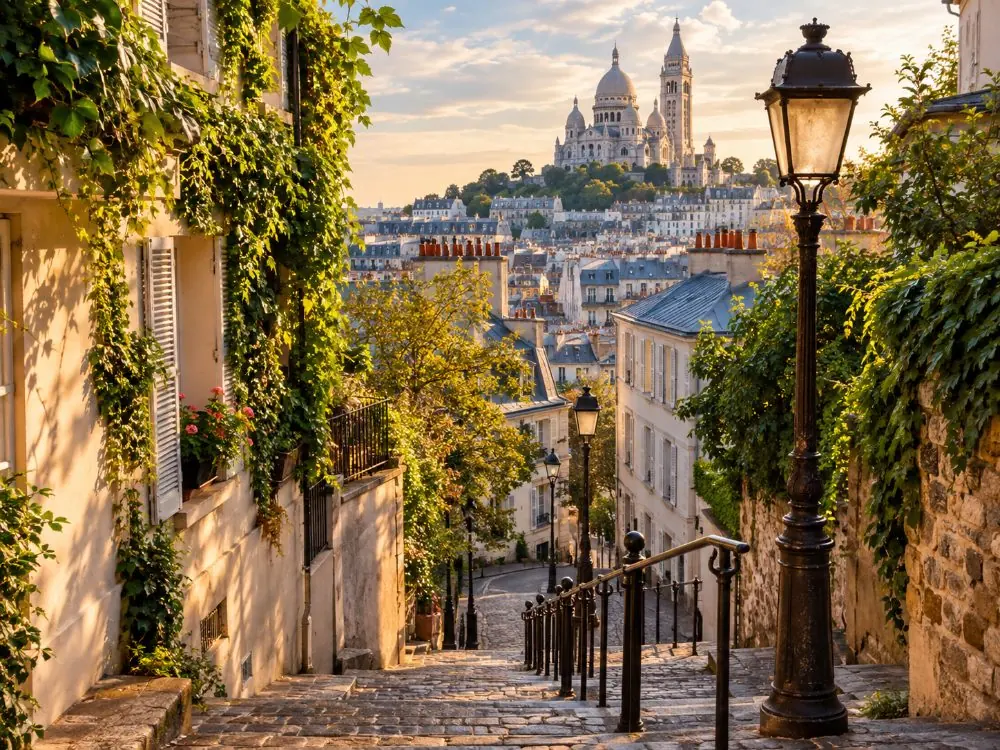 Where it all begins
Montmartre on foot: art, vineyard and gourmet delights
What visitors say
Excerpts from GetYourGuide reviews of the products compared here. First names and countries as they appear on the profiles.
Remarkable guided tour. Skip the audio guides and wait for the free tour.
A truly interesting visit with an EXCELLENT guide, René. Very clear in his explanations.
A well-signposted route, fun touchscreens and magnificent stained glass.
Magnificent cathedral, the burial place of most French monarchs.
As soon as I climbed the stairs and saw the stained glass, I was left breathless.
My son loved it; the guide was friendly and full of anecdotes.
Ratings and number of reviews are live GetYourGuide figures from operators. Read our full reviews ›
Before booking
The four questions I’m most often asked at the market, with the short answer.
Can you enter without paying ?
In the nave, yes, always, as in any church ; it is an active cathedral. In the royal necropolis, no, unless you qualify for free admission : under 18s, 18-25 year-olds who are EU nationals or regular residents in France, people with disabilities and their companion, job seekers from the EU and EEA, Pass éducation holders, École du Louvre students. The full list is on the free admission page.
Is it better to have a guide, an audioguide, or nothing ?
The guided tour in French included with the ticket is the monument’s best offer, and almost no one knows it : from Monday to Saturday at 11 am and 3 pm, on Sunday at 12 :30 pm and 3 pm, approximately 1 hour 30. If your schedule doesn’t match, the audio tour on smartphone does the job, provided you have your headphones. The comparison is on the guide, audio or nothing page.
How much time should I allow ?
One hour for a self-guided visit, an hour and a half with the included guided tour, two hours if you add La Fabrique de la Flèche — closed on Mondays, unlike the necropolis. The step-by-step timing is on the visit duration page.
Can you really see the kings’ tombs ?
No, and that’s the most important sentence on this site. In 1793, the tombs were opened by decree of the Convention to recover the lead from the coffins, and the remains were thrown into two mass graves with lime. Louis XVIII had them exhumed in 1817 : impossible to reattribute, they are mixed together in an ossuary in the crypt. What you see are monuments and recumbent statues. The full story is on the 1793 page.
These dates don’t work for you?
Browse other tickets and tours available in Saint-Denis and northern Paris, and choose the day that suits you — instant confirmation.
Saint-Denis, explained
I’ve lived on rue Gabriel-Péri since 1989 and pass the basilica every day. I do my shopping on Tuesdays and Fridays at place Jean-Jaurès, three minutes from the façade, and I always hear the same conversation : people come out, happy, saying it was beautiful and quiet. They visited the nave. They didn’t see a single king. This site exists to say that sentence before the visit, not after.
Two buildings in one
The basilica is an active church, the cathedral of the Diocese of Saint-Denis since 1966. Its nave is freely accessible, without a ticket, like any parish. It is also a national monument managed by the Centre des monuments nationaux, and this part requires payment: the choir, the ambulatory, the transept with the recumbent figures, the crypt, plus the construction site of La Fabrique de la Flèche. All the tombs are behind this boundary. The cheapest ticket among the major Gothic monuments in Île-de-France, and free for those under 18: the categories are listed on the free admission page.
What Suger invented here
Abbot Suger directed the abbey from 1122 to 1151. The choir he had built was consecrated on 11 June 1144, marking the birth of Gothic architecture: pointed arches, ribbed vaults, radiating chapels open to one another, stained glass where there was once a wall. His doctrine is summed up in two Latin words, lux nova, the new light. Everything later called Gothic stems from this ambulatory. The nave and transept were rebuilt from 1231 under Saint Louis by Pierre de Montreuil. More details are on the page dedicated to Suger.
The bodies are not where you think
It must be said plainly. Depending on the monument, 40 kings, 26 queens, 60 princes and princesses, and around ten servants of the monarchy were buried here, from Dagobert in 639 to Louis XVIII in 1824. But in 1793, by decree of the Convention, the tombs were opened; the official reason was to recover the lead from the coffins for the war. The remains were thrown into two mass graves north of the church, with lime. In 1817, Louis XVIII had them exhumed: as it was impossible to reassign them, they were placed mixed together in an ossuary in the crypt, behind a plaque listing the sovereigns. What we see today, then, are monuments and recumbent figures, not intact burials. It’s best to know this before standing in front of the plaque. The full account is on the 1793 page and on the crypt page.
Two clarifications, as I’m asked about them every week. Marie-Antoinette’s head is not lost: she was buried with her body in the Madeleine Cemetery and transferred with it in January 1815, and Louis XVIII commissioned two kneeling funerary statues for the couple, by Edme Gaulle and Pierre Petitot. As for the heart of Louis XIV, sold as pigment and then swallowed by an English collector, this is a persistent and unverifiable legend; his body was among those destroyed in 1793. See the Louis XIV page.
The recumbent figures and the transi
Over 70 recumbent figures and tombs, the world’s largest collection of funerary sculpture from the 12th to the 16th century. The ones I point out: Dagobert, whose 13th-century tomb tells his story in sculpted comic-strip form; Charles V the Wise; Bertrand du Guesclin, lying at his sovereign’s feet; Louis XII and Anne of Brittany; Francis I and Claude of France beneath their triumphal arch; Henry II and Catherine de’ Medici. And above all, the transi, the statue of the naked, emaciated body placed beneath the clothed recumbent figure. This is what shocks children and what adults still talk about on the tram. Details are on the recumbent figures page.
The best time to visit
Two pitfalls, always the same. The first: the monument closes during religious services, which spoils Sunday mornings and holidays. The second: the guided tour in French is included with the ticket, from Monday to Saturday at 11:00 and 15:00, and on Sundays at 12:30 and 15:00, lasting about 1 hour 30 minutes, and almost no one knows about it. This is by far the best thing here. Confirm the time on-site the same day and make sure to be there. In January, the ambulatory is swept by a constant draught: bring a coat. On Thursday mornings, school groups occupy the transept. Seasonal opening times are on the opening times page, and the best slot is on the best time to visit page.
What I would book
The Royal Necropolis ticket, arriving before 11 am to catch the included guided tour, followed by La Fabrique de la Flèche: allow 2 hours instead of 1 hour. Note that this workshop is closed on Mondays, while the necropolis remains open that day. If your schedule doesn’t allow waiting for the 11 am tour, the audio tour on your smartphone will do the job, provided you download the app before leaving and bring your own headphones, which are not provided; it’s a recent offering with very few reviews, just so you know. If you’re visiting several Parisian monuments, Saint-Denis is included in the Paris Museum Pass. For the same day, the Stade de France is just one tram stop away, and Sainte-Chapelle shows where Suger’s vision led. Finally, Montmartre is the other side of the same story: it’s the hill where Denis was beheaded around 250, six kilometres south of here.
Frequently asked questions
Is the visit to the Basilique de Saint-Denis ticketed?
Partially. The nave is freely accessible without a ticket : it has been the cathedral of the diocese of Saint-Denis since 1966. The royal necropolis — choir, ambulatory, transept with recumbent figures and crypt — is managed by the Centre des monuments nationaux and requires a ticket, except for free admission categories. Details without figures are available on the "how much does it cost" page and on the free admission page.
Who is buried at the Basilique de Saint-Denis?
Depending on the monument: 40 kings, 26 queens, 60 princes and princesses, and around ten servants of the monarchy, from Dagobert in 639 to Louis XVIII in 1824. Over 70 recumbent statues and tombs can be seen, including those of Dagobert, Clovis, Childebert, Charles V the Wise, Louis XII and Anne of Brittany, Francis I, Henri II and Catherine de Médicis, and Bertrand du Guesclin. The list and what “buried” means here are on the page who is buried.
Is Marie-Antoinette really buried at Saint-Denis?
Her remains, buried at the cimetière de la Madeleine, were searched for and brought back to Saint-Denis in January 1815, along with those of Louis XVI. Louis XVIII had two kneeling funerary statues erected for them, by Edme Gaulle and Pierre Petitot. As for the question of the head: it was buried with the body at the Madeleine and transferred with it; there is no lost head. See the Marie-Antoinette page and the page on the two remains.
What are the opening hours of the Basilique de Saint-Denis?
From April to September: Monday to Saturday from 10:00 AM to 5:45 PM, Sunday from 12:00 PM to 5:45 PM. From October to March: Monday to Saturday from 10:00 AM to 4:45 PM, Sunday from 12:00 PM to 4:45 PM. Closed on January 1, May 1, and December 25, and during religious services. La Fabrique de la Flèche is closed on Mondays, but the necropolis is not. Everything is on the opening hours page.
How do I get to the Basilique de Saint-Denis from Paris?
Metro line 13, Basilique de Saint-Denis station, about 100 metres away: be careful, line 13 splits, you need the Saint-Denis-Université branch, not Asnières-Gennevilliers. Alternatively, take the RER D to Saint-Denis, then tramway T1, five minutes; or RER B then bus 153 or 253. The three routes are detailed on the access page.
Why does the Basilique de Saint-Denis only have one tower?
The north tower and its spire were dismantled stone by stone between 1846 and 1847 by the architect François Debret, after storms, including the one in June 1845, had weakened them. The spire was never rebuilt; this is the focus of the current project, La Fabrique de la Flèche, which can be visited from Tuesday to Sunday. See the page on the missing tower and the construction site page.
Basilica or cathedral: which is it?
Both. “Basilica” is an honorary title granted by the Pope; “cathedral” refers to the church where the bishop is seated. Saint-Denis has been a basilica since 1966 and the cathedral of the Diocese of Saint-Denis, created the same year. The monument belongs to the French state and is managed by the Centre des monuments nationaux, with worship overseen by the diocese. See the basilica or cathedral page and the ownership page.
Why is Saint Denis depicted carrying his head?
Paris’s first bishop, he was beheaded around 250 on the hill of Montmartre, the mons martyrum. The legend of the cephalophore, formed in the 9th century, tells that he picks up his head, washes it at a fountain, and walks about six kilometres north before falling: that is where he is buried and where the abbey will be born. Historically, the tomb of a venerated martyr is attested on the site as early as the 3rd–4th century. See the page on the beheading and the Montmartre page.
Still have a question? Write to us at [email protected]